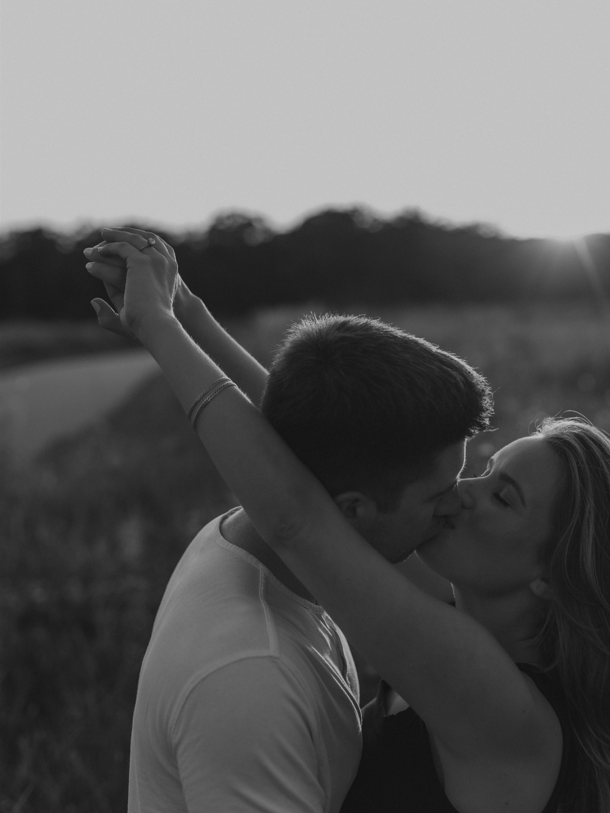
Black and white photos rely on contrast and texture to tell a story. Removing color highlights physical patterns. Stone, cotton, and tall grass take center stage. Paying attention to these surface details gives your couple photos clear depth. Here is how texture in black and white photography elevates outdoor portraits.
Water Surfaces and Sky Backdrops
Water and sky act as simple backdrops for black and white edits. Standing by a calm shoreline places smooth water ripples behind dark clothing. This contrast lets water movement stand out without drawing focus away.
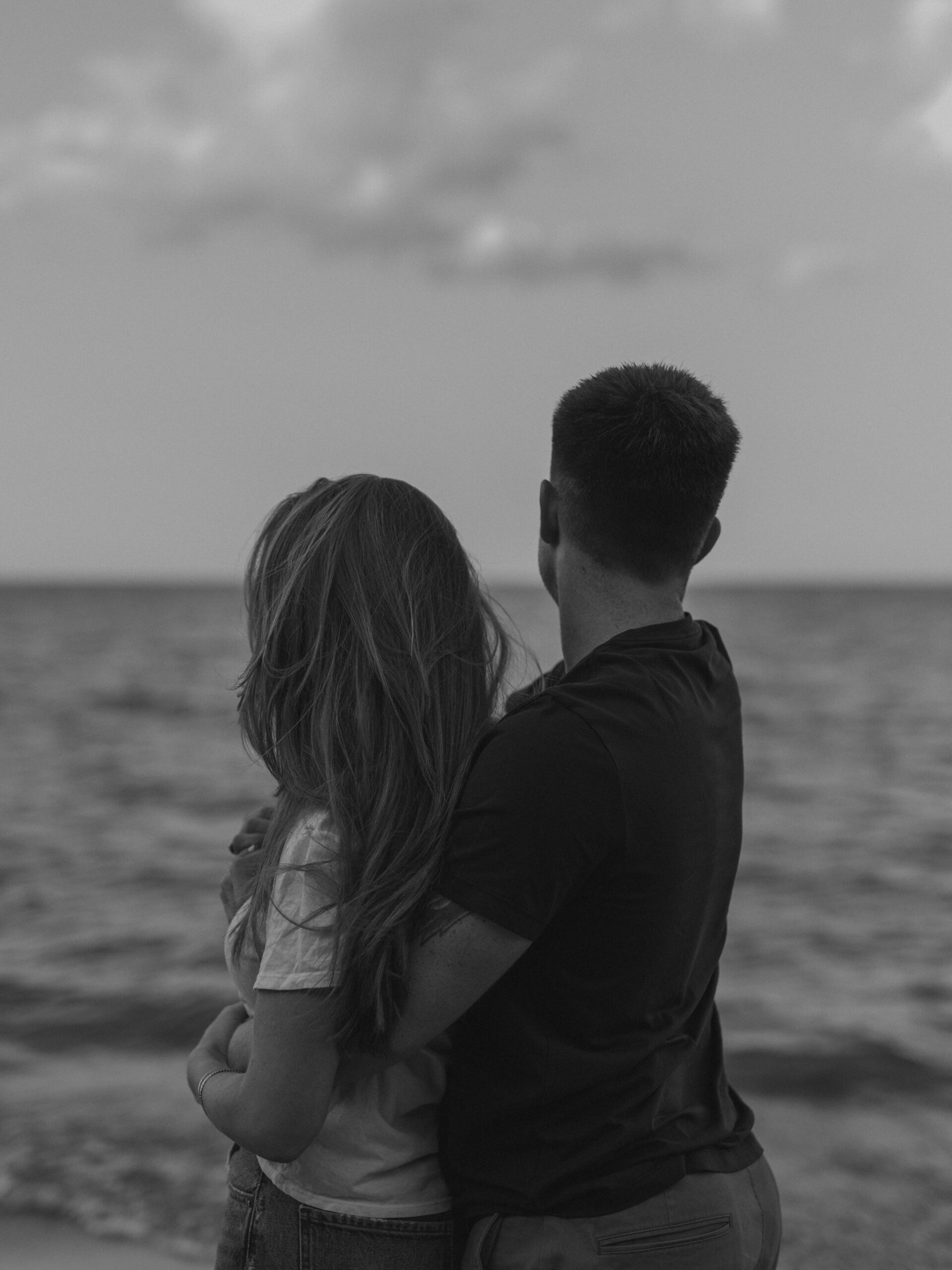
Water reflections add light grey tones behind clean silhouettes. A smooth background highlights your shape and posture as you look out together.
Rough Stone and Rock Textures
Hard surfaces create strong contrast against soft clothing and skin. Sitting on large boulders brings out cracks and shadow lines in the stone. These sharp details frame smooth t-shirts and long hair naturally.
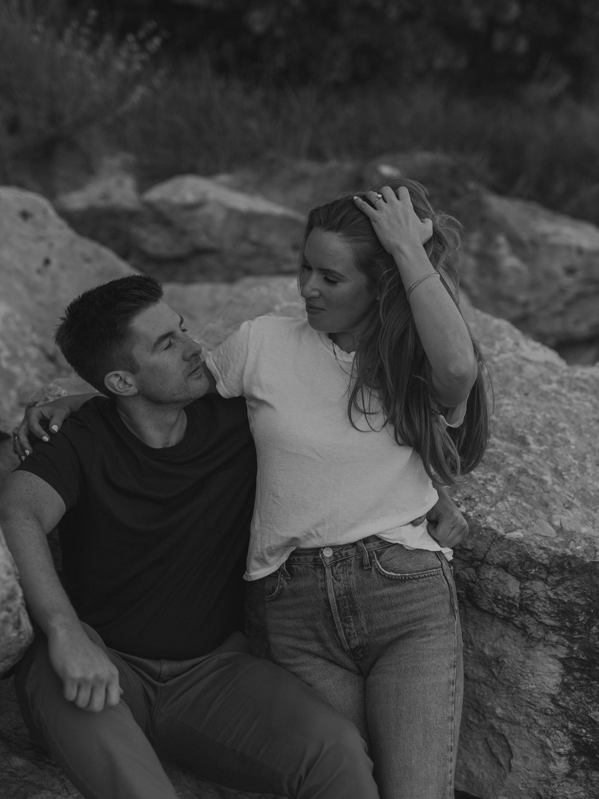
Coarse rock patterns catch direct sunlight, creating bright spots next to deep shadows. This balance keeps your portraits grounded and adds physical texture to the frame.
Tall Grass and Field Patterns
Walking through open fields introduces organic patterns to wide environmental shots. Fine stems, seed heads, and brush create a rich weave of tones around your feet. The contrast between dark grass and light shirts keeps your movement clear.
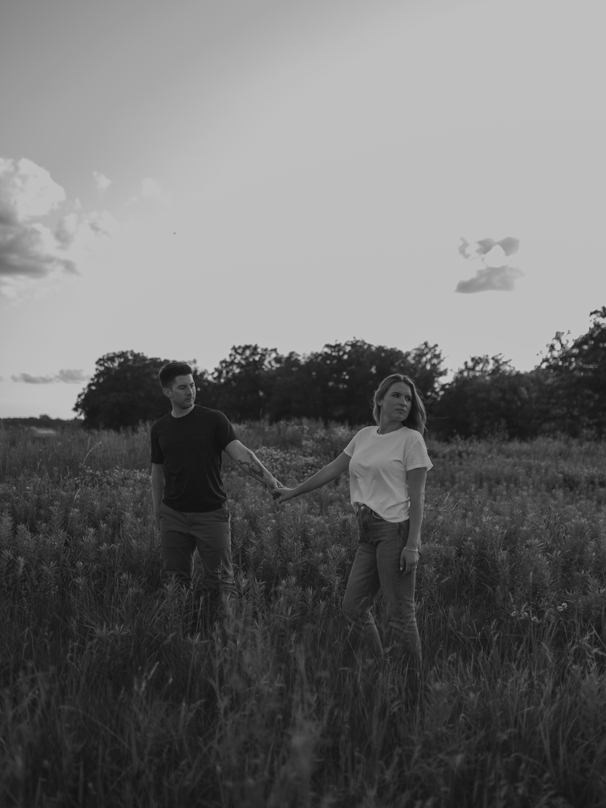
Dense field foliage adds visual weight to the bottom of your image. This natural framing draws the eye straight up to your hands and expressions.
Wildflowers and Fabric Layers
Ground-level shots allow close-up textures to take over the image. Lying down together in wild clover mixes soft flower petals with denim jeans and cotton tops. Grayscale edits turn these overlapping materials into detailed visual layers.
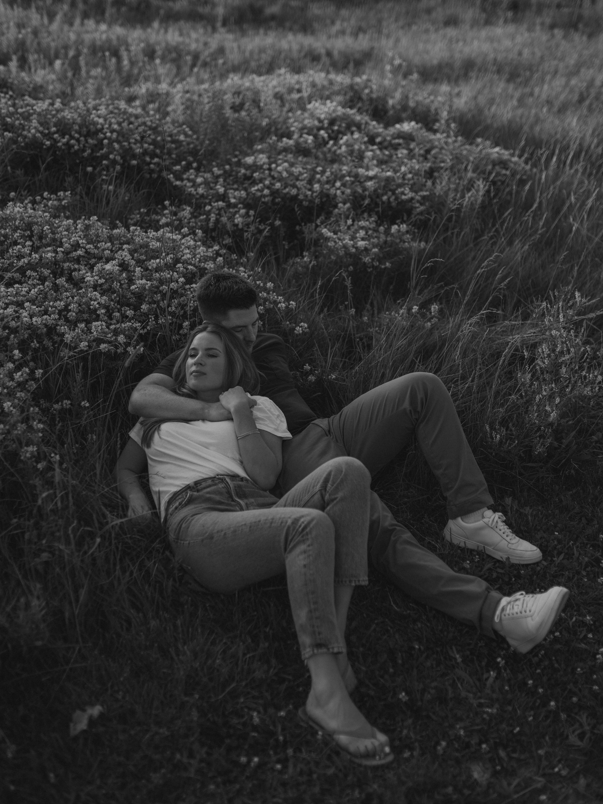
Small wildflower clusters separate light tops from dark soil. Resting close on the grass transforms simple outdoor moments into rich, textured portraits.
The Takeaway
Using natural textures gives monochrome photos structure and strength. Focusing on environmental details keeps your black and white gallery from feeling flat.
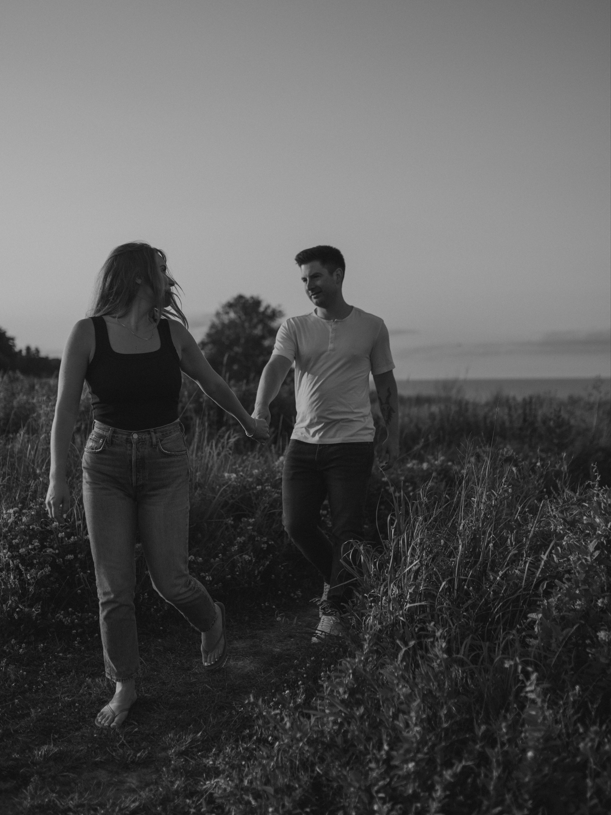
Walking down a dirt path surrounded by tall grass creates a balanced mix of soft foliage and smooth sky. These rich surface details give outdoor walks a clean, timeless finish.
💡Pro Tip: Choose Textured Fabrics for Your Outfits Opt for clothing items with visible texture when planning black and white photos. Denim, knits, linen, and ribbed cotton capture light better than flat synthetic fabrics. These weave patterns bring extra detail to close-up holds and embrace shots. |
Black and white photos rely on contrast and texture to tell a story. Removing color highlights physical patterns. Stone, cotton, and tall grass take center stage. Paying attention to these surface details gives your couple photos clear depth. Here is how texture in black and white photography elevates outdoor portraits.
Water Surfaces and Sky Backdrops
Water and sky act as simple backdrops for black and white edits. Standing by a calm shoreline places smooth water ripples behind dark clothing. This contrast lets water movement stand out without drawing focus away.
Water reflections add light grey tones behind clean silhouettes. A smooth background highlights your shape and posture as you look out together.
Rough Stone and Rock Textures
Hard surfaces create strong contrast against soft clothing and skin. Sitting on large boulders brings out cracks and shadow lines in the stone. These sharp details frame smooth t-shirts and long hair naturally.
Coarse rock patterns catch direct sunlight, creating bright spots next to deep shadows. This balance keeps your portraits grounded and adds physical texture to the frame.
Tall Grass and Field Patterns
Walking through open fields introduces organic patterns to wide environmental shots. Fine stems, seed heads, and brush create a rich weave of tones around your feet. The contrast between dark grass and light shirts keeps your movement clear.
Dense field foliage adds visual weight to the bottom of your image. This natural framing draws the eye straight up to your hands and expressions.
Wildflowers and Fabric Layers
Ground-level shots allow close-up textures to take over the image. Lying down together in wild clover mixes soft flower petals with denim jeans and cotton tops. Grayscale edits turn these overlapping materials into detailed visual layers.
Small wildflower clusters separate light tops from dark soil. Resting close on the grass transforms simple outdoor moments into rich, textured portraits.
The Takeaway
Using natural textures gives monochrome photos structure and strength. Focusing on environmental details keeps your black and white gallery from feeling flat.
Walking down a dirt path surrounded by tall grass creates a balanced mix of soft foliage and smooth sky. These rich surface details give outdoor walks a clean, timeless finish.
💡Pro Tip: Choose Textured Fabrics for Your Outfits Opt for clothing items with visible texture when planning black and white photos. Denim, knits, linen, and ribbed cotton capture light better than flat synthetic fabrics. These weave patterns bring extra detail to close-up holds and embrace shots. |


